How to Choose a Cruise Cabin That Fits Your Needs
Choose a cruise cabin location by matching your sleep, movement, view, access, and budget priorities with the ship’s deck plan. CruiseTourParadiseValley.link can help you compare ocean and river cruise cabin options through Free Consultations.
Written by Wendy Denny
Request an EstimateWritten by Wendy Denny.
Our team helps travelers compare cabin choices before booking. We look at the ship layout, cruise itinerary, and your personal preferences.
We also help compare ocean cruises and river cruises through our cruise agency services.
Start With the Cruise Experience You Want
The best cruise cabin matches your preferred sleep, movement, view, and access needs. Your cruise itinerary also affects which cabin position feels most comfortable.
An ocean cruise may involve open-water movement and changing sea conditions. A river cruise usually follows a narrower route, but views, docking patterns, and shore access still matter.
Start by deciding how much you value quiet, natural light, outdoor space, easy access, or a lower fare. These traveler preferences guide the rest of your cabin search.
Where Exactly Is Your Cabin?
Your cabin is located by its deck, ship section, side, and position near public areas or equipment.
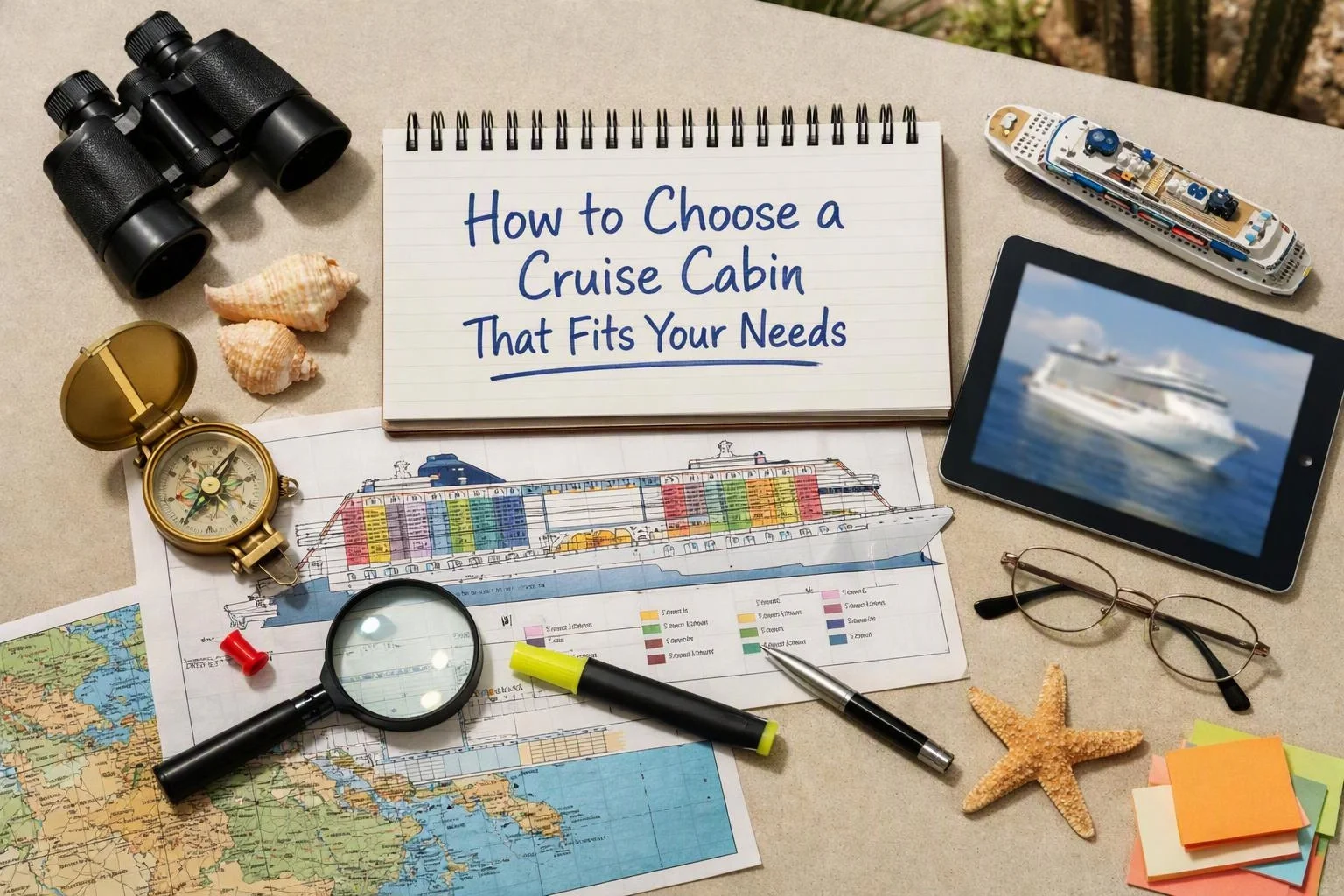
The ship deck plan shows the cabin number, deck, and position. It also shows whether the room sits near the bow, stern, or midship.
The plan identifies the port side and starboard side. It can also show elevators, stairways, restaurants, theaters, pool areas, and service spaces.
A cabin near elevators or stairs can make access easier. A room beside busy public areas may also experience more foot traffic.
Compare Cruise Cabin Locations Before You Book
The best cabin location depends on how much you value steady movement, easy access, natural light, outdoor space, and quiet.
These options describe common cabin positions and categories. Exact layouts vary by ship, so review the deck plan for the sailing you choose.
Options at a Glance
| Option / System | Best For | Typical Lifespan / Turnaround | Key Trade-Offs |
|---|---|---|---|
| Midship cabin | Travelers concerned about movement | Applies for the cruise itinerary | May be near elevators or busy corridors |
| Forward or aft cabin | Travelers who prefer a specific ship section | Applies for the cruise itinerary | Movement and sound can vary by ship |
| Upper-deck cabin | Guests wanting access to upper public areas | Applies for the cruise itinerary | May be close to pool deck activity |
| Lower-deck cabin | Guests who prefer a lower ship position | Applies for the cruise itinerary | May offer less daylight or view |
| Interior cabin | Travelers focused on privacy and budget | Applies for the cruise itinerary | No direct window or private balcony |
| Oceanview or balcony cabin | Travelers wanting light or outdoor space | Applies for the cruise itinerary | Views may be partly blocked |
| River cruise cabin | Travelers focused on route views and access | Applies for the cruise itinerary | Docking can affect views and balcony use |
Review the category and exact cabin position together. A balcony cabin beside a service corridor may suit you less than a simpler room in a quieter location.
Match the Cabin to Your Sleep and Movement Needs
Light sleepers should avoid cabins beside nightlife venues, elevators, service areas, machinery, and high-traffic walkways.
A light sleeper should check for theater, nightlife, pool deck, and service corridor locations. Engine noise and ship vibration may also matter near equipment spaces.
Travelers with seasickness or motion sensitivity often prefer a midship position. A lower position may also feel steadier, but ship design and weather still affect movement.
Anchor handling can create sound near the front of the ship. Review the deck plan and ask our team about nearby noise sources before choosing.
Signs a Cruise Cabin May Not Fit Your Needs
A cabin may be a poor match when its location conflicts with your sleep, movement, view, or access needs.
What Causes a Poor Cabin Match?
Poor cabin matches usually come from checking the cabin category without reviewing the full ship layout.
What Is an Obstructed View Cabin?
An obstructed view cabin is an oceanview or balcony cabin where ship equipment or structure blocks part of the expected view.
An obstructed view cabin may sit behind a lifeboat, tender boat, railing, or support structure. The obstruction can affect a window or private balcony.
Cabin descriptions may identify the obstruction, but the deck plan gives more useful context. Our team checks the cabin position and category together before discussing suitable options.
Use These Steps to Choose Your Cabin Location
A cruise cabin checklist helps you compare personal priorities with the actual ship layout.
Our team can help you apply this process to a specific ship. We focus on the cabin number, category, position, and itinerary details.
Prevent Common Cabin Problems Before Booking
Careful cabin selection reduces surprises after the booking is confirmed.
Choose Cabin Features That Support Your Trip
Cabin features should support how you sleep, move, store belongings, and spend time onboard.
An interior cabin may suit travelers who don't need natural light. An oceanview cabin adds a window, while a balcony cabin adds private outdoor space.
A suite can provide more living space and storage. A connecting cabin can help families or groups stay close while keeping separate rooms.
An accessible cabin may include features that support mobility needs. Check the bathroom layout, cabin door, bed configuration, desk, storage, and balcony access before booking.
Single cabins can suit travelers who want their own space. The right cabin category depends on your itinerary, daily habits, and access needs.
How We Help You Review Cruise Cabin Options
CruiseTourParadiseValley.link reviews the ship layout, cabin position, category, itinerary, and traveler priorities before discussing suitable options.
Our cruise agency team compares ocean cruises and river cruises with your sleep preferences, motion sensitivity, view needs, and mobility needs in mind.
We review the deck plan, nearby public spaces, possible noise sources, cabin accessibility, and booking terms. We then explain what each option may offer and what trade-offs to consider.
Contact our team through Free Consultations when you want help reviewing cabin choices for your trip.
Questions About Choosing a Cruise Cabin
Is a midship cabin better for avoiding motion?
Yes, a midship cabin often suits travelers who want steadier movement. Ship design, weather, and itinerary conditions still affect how much motion you feel.
Are cabins near elevators noisy on a cruise ship?
Cabins near elevators can experience more foot traffic and door sounds. Light sleepers should compare elevator locations with quieter areas on the deck plan.
Is an interior cabin a good choice for a light sleeper?
An interior cabin can suit a light sleeper when its position is away from nightlife, elevators, service areas, and machinery. The category alone doesn't determine the noise level.
How can I check whether a cruise cabin has an obstructed view?
Check the cabin description and deck plan for lifeboats, tender boats, railings, or support structures. Our team can also review the cabin position before you choose it.
Should I choose a balcony cabin for an ocean cruise?
Choose a balcony cabin when private outdoor space adds value to your trip. Review the itinerary, expected use, view, and possible obstruction before booking.
What cruise cabin location is easiest for passengers with mobility needs?
An accessible cabin near elevators is often easiest for passengers with mobility needs. Confirm the route, bathroom layout, door access, and cabin features before booking.
Use our Free Consultations to review cabin options with your itinerary and travel priorities.
Related Resources
Cruise Travel Agent vs. Booking Direct: Which Is Right for Your Trip?
Compared ToIndependent Cruise Advisor vs. Large Agency: How to Choose
Compared ToCruise Specialist vs. General Travel Agent: Which Should You Hire?
Compared ToRiver Cruise vs. Ocean Cruise: Which Should Your Travel Advisor Plan?